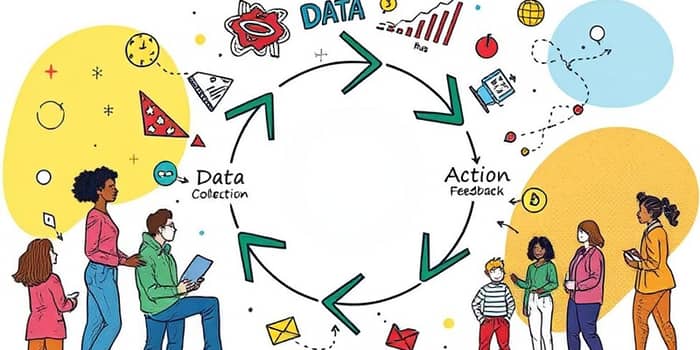
In today’s evolving business landscape, understanding and harnessing the power of feedback loops can transform ordinary operations into engines of growth. By capturing insights, acting decisively, and refining continuously, organizations can stay ahead of market shifts and customer expectations.
A feedback loop is a cyclical process where outputs are rerouted as inputs, creating a dynamic mechanism for ongoing refinement. It hinges on four key stages:
This cycle fosters continuous improvement and adaptation, empowering teams to learn from every outcome and chart clearer paths forward.
Feedback loops split into two primary categories, each playing a vital role in an organization’s health:
Together, these loops create a harmonious system where growth and stability coexist, ensuring both innovation and reliability.
Building an effective feedback loop involves deliberate design and focused execution. Organizations typically follow a structured five-step process:
When each stage is executed with intention, feedback loops generate actionable and measurable insights that drive tangible results.
Organizations that embed feedback loops into their culture reap substantial rewards. Some of the most impactful benefits include:
Accelerated innovation – By testing minimum viable products (MVPs) and iterating based on user reactions, teams can introduce breakthroughs more rapidly and with greater precision.
Enhanced customer loyalty– Customers appreciate when their voices shape the products they use. Notifying them of updates based on their suggestions builds trust and lasting loyalty.
Elevated employee engagement– Regular, meaningful feedback empowers employees to grow, collaborate more effectively, and feel valued. A Gallup survey found that employees receiving weekly feedback are far more engaged and proactive.
Data-driven decision making– Moving away from gut instincts to evidence-based strategies reduces risk and fosters clear communication across departments.
Across industries, feedback loops serve as catalysts for transformation. Consider a software startup that launched a beta version to a select group of users. By collecting usage patterns and satisfaction ratings, the team prioritized feature improvements that increased adoption by 30% within months.
In retail, a leading brand tracks real-time customer reviews to identify common pain points at checkout. Swift adjustments to interface design and training materials reduced cart abandonment by 20%.
Even corporate strategy benefits: an enterprise regularly conducts post-project retrospectives, gathering insights on what went well and what needed refinement. These learnings inform future initiatives, ensuring each project surpasses the last in efficiency and impact.
Embedding feedback loops requires more than tools; it demands a cultural shift. Leaders can nurture this environment by:
By championing an atmosphere where every voice matters, organizations cultivate open communication channels that spur collaboration and ownership.
To ensure feedback loops deliver on their promise, track key performance indicators:
Regularly reviewing these metrics keeps the loop agile and responsive, aligning efforts with evolving goals.
Common obstacles include delayed data collection, superficial analysis, and inconsistent follow-through. To overcome these hurdles, organizations should:
By embedding these best practices, teams can transform challenges into opportunities, maintaining a competitive edge in any market.
Feedback loops are more than operational tools; they are powerful engines of innovation, engagement, and trust. When organizations commit to capturing insights, acting decisively, and communicating outcomes, they unlock a perpetual cycle of growth.
Embrace the feedback loop today to inspire new ideas, delight your customers, and build a resilient, forward-thinking culture. The journey of continuous refinement awaits — and the rewards are limitless.
References