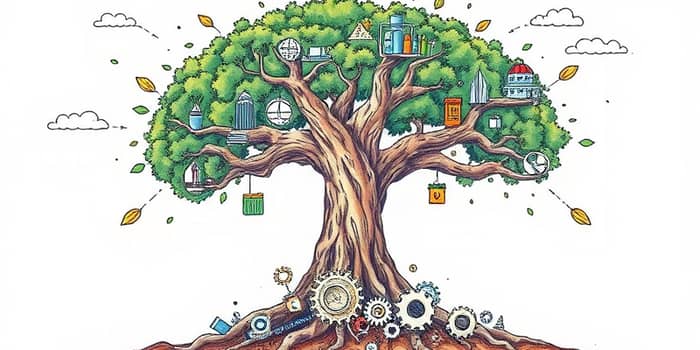
In today’s dynamic economy, sustainable scaling is not just a goal but a necessity. Companies that chase rapid growth without a sturdy foundation often encounter operational chaos, cash shortages, and dissatisfied customers. This article unveils proven frameworks and strategies to help leaders scale their businesses methodically, maintain resilience, and secure long-term success.
Sustainable business growth focuses on expanding revenue and market presence without compromising stability. It begins by asking critical questions: address key questions before scaling ensures that resources, capabilities, and market fit are aligned. Leaders must define where to grow and what stays constant to avoid distractions and maintain organizational coherence.
At its core, sustainable scaling balances ambition with discipline. Instead of pursuing every opportunity, companies identify high-impact segments—whether geographies, customer types, or product lines—that align with their innate strengths and market demand.
By clarifying prioritize stability over rapid expansion, teams can build operational systems that withstand increased complexity. This approach minimizes the risk of cash flow pinch points and customer churn as the company grows.
Leaders can choose from multiple scalable strategies depending on their industry, resources, and market dynamics. Four primary tactics include:
Each approach carries unique benefits and pitfalls. Market penetration compounds organizational learning with minimal complexity, provided retention remains strong. Conversely, venturing into adjacent markets demands rigorous research and phased rollouts to avoid overextension through phased scaling.
Beyond these fundamentals, companies can explore business model innovation to reshape value capture and seize new revenue streams. Alternatively, a Blue Ocean Strategy encourages uncontested market creation by reimagining product offerings and customer experiences, effectively making competition irrelevant.
Behind every successful scale story lies a fortified operational backbone. Companies must invest in processes, technology, and talent to handle increasing volume without sacrificing quality or speed. Key actions include:
By integrating automation early, organizations benefit from compress feedback loops for speed, enabling rapid iteration and continuous improvement. This systematic approach fosters a culture of reliability and responsiveness as demands grow.
Maintaining balance between operational excellence and financial discipline is essential. The table below highlights key pillars that companies should strengthen before pursuing aggressive growth:
Aligning these pillars establishes a resilient platform for expansion, mitigating risks associated with rapid scaling.
Unchecked spending can undermine even the most promising growth initiatives. Financial discipline involves rigorous budgeting, forecasts, and spending reviews.
Renegotiating vendor contracts regularly captures cost savings. Adopting virtual collaboration tools reduces travel and meeting expenses. Monitoring cash flow daily and segmenting growth phases into manageable milestones prevents surprises. Applying scenario planning anticipates funding gaps and infrastructure strain. These measures help businesses strengthen foundations before growth leaps, ensuring that each expansion phase is supported by robust financial health.
As we move into 2026, two forces redefine growth: human-centered AI capabilities and integrated sustainability. Simply adopting generic AI tools is no longer enough. Teams must cultivate strategic thinking, data literacy, and domain expertise to transform insights into action.
On the sustainability front, environmental, social, and governance (ESG) commitments influence purchasing decisions and investor preferences. Organizations that articulate clear sustainability metrics—such as renewables adoption, supply chain transparency, and net-zero targets—gain competitive advantage and brand trust.
Emerging opportunities include blended finance models, nature-aligned investments in emerging markets, and carbon management innovations. By aligning growth plans with global sustainability objectives, companies secure long-term resilience and stakeholder support.
Companies that implement energy efficiency measures can cut bills by 18-25% through smarter operations. Transparent ESG reporting, such as adopting standardized sustainability frameworks, not only bolsters investor confidence but also drives operational improvements by highlighting carbon hotspots and supply chain vulnerabilities.
Every growth journey encounters obstacles. Common pitfalls include neglecting product-market fit, over-diversification, and underestimating retention challenges. To navigate these hazards:
By adopting adaptable strategies and avoid overextension through phased scaling, leaders can course-correct early and sustain momentum.
Scaling sustainably requires a blend of strategic clarity, operational robustness, financial discipline, and risk awareness. By answering fundamental questions—where to grow and what breaks under pressure—organizations can chart growth paths that deliver value without chaos.
Leaders who invest in their foundations, leverage data-driven insights, and embed sustainability into their core strategy will outpace competitors and build enduring brands. Remember that AI-driven analytics and sustainability commitments must work hand in hand to illuminate insights and align strategies with both profit and purpose.
The journey toward sustainable growth is continuous, demanding ongoing learning, adaptation, and bold leadership. Start today by aligning your team around a shared vision, strengthening your pillars, and approaching every growth opportunity with discipline and foresight.
References