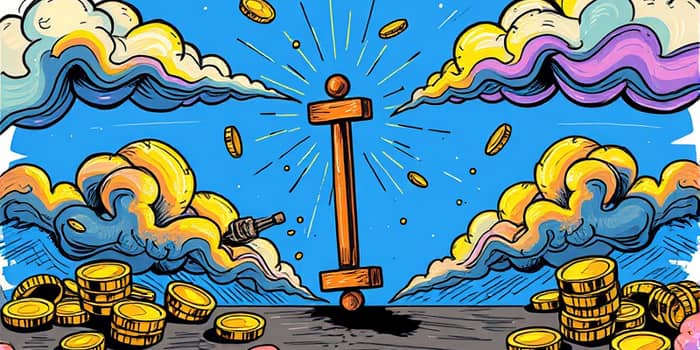
Imagine a lever in physics, where a small force can move a heavy object. In finance, leverage works similarly, using borrowed funds to control larger positions than your own capital allows.
This mechanism can transform modest investments into substantial profits, but it also carries the risk of magnifying losses exponentially. Understanding leverage is essential for anyone navigating the financial markets.
At its heart, leverage is about amplifying your investment power through debt. Whether in stocks, forex, or corporate ventures, it enables you to increase exposure and potentially boost returns.
However, this comes with significant responsibilities and dangers. Let's delve into how leverage works, its benefits, risks, and practical applications to empower your financial journey.
Leverage allows you to control a larger asset base with a smaller initial investment. For instance, with $100 of your own money and a 10:1 leverage ratio, you can manage $1,000 worth of assets.
The process typically involves depositing margin, which is your own capital, and borrowing the remainder from a broker. After the trade, you repay the loan plus interest and fees.
This amplification effect can lead to impressive gains. Consider a scenario where an asset increases by 10%. With 10:1 leverage, your return on capital jumps to 100%, compared to just 10% without leverage.
But the reverse is equally true. A 10% drop in asset value with the same leverage results in a 100% loss on your capital, plus additional costs. This dual nature defines the leverage experience.
This table illustrates how leverage can dramatically increase potential returns, but always remember that losses scale just as sharply.
Leverage manifests in various forms across different financial contexts. Each type serves unique purposes and comes with its own set of rules and risks.
Understanding these types helps in choosing the right leverage strategy for your goals. For instance, corporate leverage focuses on long-term growth, while trading leverage is more about short-term market movements.
To assess leverage and its associated risks, financial professionals use specific ratios. These metrics provide insights into debt burden and financial health.
For example, with $20 million in debt, $25 million in equity, and $5 million EBITDA, the debt/equity ratio is 0.8, and the debt/EBITDA ratio is 4x. These numbers help in evaluating financial stability and risk exposure.
Leverage offers several advantages that can enhance financial outcomes when used wisely. These benefits make it an attractive tool for both individuals and corporations.
These benefits underscore why leverage is a key tool in modern finance, enabling growth and opportunity that might otherwise be out of reach.
Despite its advantages, leverage carries inherent risks that must not be overlooked. Ignoring these can lead to severe financial consequences.
This list highlights the critical need for caution and discipline when using leverage. It's not a tool for the faint-hearted or unprepared.
Leverage is applied in various real-world scenarios, from everyday investments to large-scale corporate strategies. Understanding these applications can help you see its impact in action.
In trading, forex markets often use high leverage, such as 50:1, allowing traders to control large currency positions with small margins. This can lead to quick profits but also rapid losses if markets move against them.
In corporate finance, companies might issue bonds to fund expansions, leveraging debt to avoid diluting ownership. If the expansion succeeds, shareholders benefit from enhanced returns.
Leveraged buyouts (LBOs) are a classic example in private equity, where firms acquire companies using significant debt, aiming to improve operations and sell later for a profit. This strategy relies on careful risk management and timing.
Even in personal finance, mortgages leverage a small down payment to purchase a home, making homeownership accessible but also tying you to long-term debt obligations.
These examples show that leverage is ubiquitous, but its success depends on strategic planning and market conditions. Always consider your goals and risk tolerance before diving in.
To use leverage effectively, it's essential to adopt a prudent approach. Here are key considerations to help you mitigate risks and maximize benefits.
By following these guidelines, you can harness the power of leverage responsibly, turning it into a valuable ally in your financial journey rather than a source of ruin.
Leverage in finance is a double-edged sword that demands respect and wisdom. When wielded with care, it can open doors to unprecedented growth and opportunity.
But always remember that with great power comes great responsibility. Embrace leverage as a tool for amplification, not a shortcut to riches, and let it inspire you to build a more resilient and prosperous financial future.
References