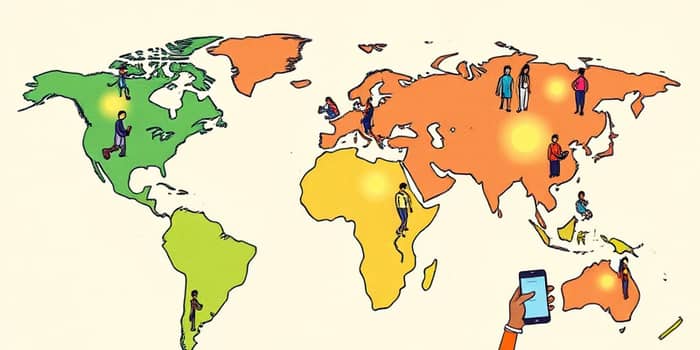
The world is witnessing an unprecedented shift as digital technologies reach the last mile, empowering millions to join the financial ecosystem. This transformation is not just about numbers—it’s about hope, dignity, and opportunity.
In just over a decade, the landscape of financial access has been revolutionized. From 51% of adults having formal accounts in 2011 to 79% today, the growth is nothing short of remarkable. Yet, 1.6 billion people still remain on the fringes, either unbanked or inactive.
Mobile penetration has soared to 86% globally, making digital channels the most effective conduit for inclusion. Digital payments are now the norm—62% of adults made or received a payment electronically in 2024, up 28% over the last decade.
At the heart of this revolution lies the smartphone. Mobile money services have enabled millions in Sub-Saharan Africa and beyond to bypass traditional banking infrastructure and access a suite of financial tools directly from their devices.
This transformative power of digital extends beyond transactions. It fosters a culture of saving—formal savings accounts in low- and middle-income economies grew from 25% to 40% in just three years, yet nearly half of these adults still lack a financial cushion for emergencies.
Despite progress, challenges persist. Limited financial literacy and uneven digital skills leave many vulnerable to fraud and predatory lending. Sixteen percent of adults still lack mobile access, creating a stubborn digital divide.
Addressing these barriers requires a multi-pronged approach. Community workshops can improve skills, while robust consumer protection measures build trust. Simplifying user interfaces and reducing transaction costs can bring millions online.
Leading organizations and governments are aligning to scale impact. Mastercard’s commitment to bring previously excluded populations into the digital economy has already touched over a billion lives, while the IMF’s Financial Access Survey provides vital data for policymaking.
Progress demands cooperation between public and private sectors. By creating clear regulatory frameworks and incentivizing innovation, stakeholders can ensure services remain affordable and secure.
The next frontier of financial inclusion emphasizes well-being over mere access. Providers are measuring success by how well services help individuals withstand shocks and build assets. Integrating climate resilience into product design ensures that users are protected against environmental disruptions.
Responsible innovation is paramount. Solutions must be not just accessible but also responsible, with built-in safeguards against fraud and over-indebtedness. Keeping money digital enhances security, reduces costs, and helps users develop credible financial histories.
Regions such as Sub-Saharan Africa exemplify the potential. Mobile money has surged from 55 transactions per adult in 2017 to 251 by 2024, proving that innovation tailored to local contexts can drive deep inclusion.
At the heart of these advances are people—entrepreneurs, farmers, small-business owners—seeking stability and growth. Digital tools allow them to save regularly, access credit, and insure their livelihoods against unexpected events.
To harness these opportunities, users can:
Collectively, these steps create a virtuous cycle: as more individuals gain financial health, economies stabilize and grow, lifting communities out of poverty.
Financial inclusion is more than a policy goal—it’s a pathway to human dignity. By embracing digital financial services responsibly, we can ensure that no one is left behind, unlocking prosperity for all.
References