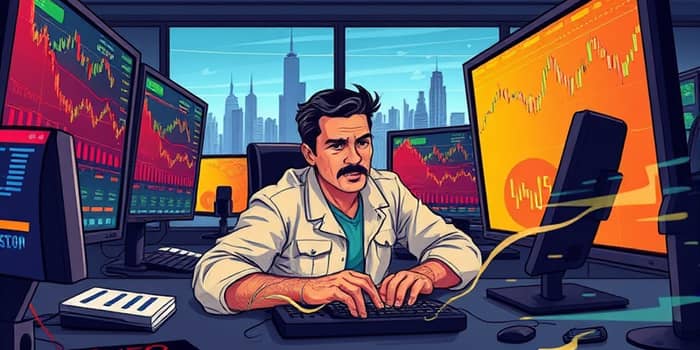
In the heart of financial markets lies a world where seconds matter, opportunities emerge and vanish in the blink of an eye, and fortunes can be made or lost within hours. Day trading demands a unique blend of skill, discipline and adaptability, transforming the trading floor into a battleground of strategy and nerve.
Day trading refers to the practice of buying and selling financial instruments—stocks, options, currencies—within the same trading day. Positions are opened shortly after market open and closed before the market’s close, leaving no holdings overnight.
Key characteristics include constant market monitoring and rapid decisions and intraday price volatility and small fluctuations. Traders often execute multiple trades per session, relying on quick analysis of charts and real-time data feeds. Unlike swing or position trading, which spans days to months, day trading compresses timeframes to seek rapid high-volume trading sessions that capitalize on fleeting inefficiencies.
Successful day traders employ a variety of approaches to capture profit from small price movements. Each method demands rigorous preparation and a clear set of rules.
Despite alluring profit stories, day trading carries formidable odds. Research shows only 13% of traders profit over a six-month period, dwindling to 1% over five years. The majority endure losses before deciding to quit, with 40% leaving within one month and just 13% persisting after three years.
The attrition rate underscores the importance of capital preservation and extreme discipline and unwavering patience. Even among professional setups, such as prop trading firms, success remains elusive: only 16% of traders were profitable in one notable study, while 84% incurred losses.
The scale of day trading activity evolves with market conditions, technology, and retail participation. In the U.S., daily share volumes on NYSE average over 1.5 billion shares, while Nasdaq regularly exceeds nine billion. Options trading has surged as well, with record volumes in SPX contracts during global hours.
Global market cap forecasts approach $60 trillion by 2026, with day trading representing a significant share of daily volume and fueling liquidity across asset classes.
While day trading offers the allure of immediate gains, it magnifies vulnerabilities: volatility can work against positions in an instant, and leverage amplifies both returns and losses. Intraday whipsaws and sudden news events demand a robust risk framework.
Regulatory bodies impose safeguards such as the FINRA Pattern Day Trader rule, requiring a minimum account equity of $25,000 for more than three day trades within a rolling five-day period. Stop-loss orders and pre-set entry or exit limits are essential to minimize emotional decision making and preserve capital.
Beyond technical expertise, the mental component is the ultimate differentiator. Day traders must cultivate strict rules-based trading regime and maintain composure amidst profit and loss cycles. Overconfidence following a winning streak can lead to overtrading, while early losses may trigger hesitation or revenge trading.
For those willing to invest in education, technology, and self-development, day trading can be a viable career path. Key steps include:
Persistence is critical; traders who commit to ongoing improvement and rigorous rules-based approach stand a better chance of weathering initial losses and achieving consistent profitability.
Day trading embodies the intersection of opportunity and challenge, offering the potential for rapid gains alongside steep learning curves and significant risk. It demands mastery of technical strategies, strict risk management, and unwavering mental fortitude.
By understanding the statistical realities, respecting regulatory thresholds, and fostering a disciplined mindset, aspiring traders can navigate the fast lane of finance with greater confidence. While success is far from guaranteed, those who approach day trading as a profession—committing to preparation, analysis and emotional control—can unlock the unique rewards this high-octane arena presents.
References