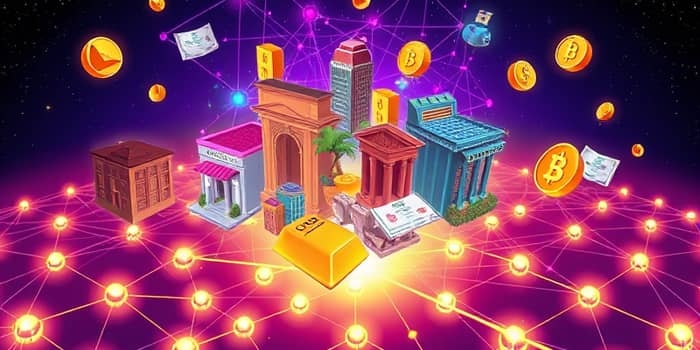
In an era where innovation reshapes the very foundations of finance, asset tokenization stands out as a transformative force. By converting ownership records into blockchain-based tokens, investors and institutions can access markets previously out of reach, enjoy unprecedented liquidity, and participate in a more inclusive financial landscape.
Asset tokenization is the process of recording ownership rights to physical or digital assets on a blockchain. Whether it’s real estate, corporate stock, or fine art, each asset’s ownership is represented by digital tokens, providing immutable proof of ownership that cannot be altered or erased by any single authority.
These two models ensure flexibility: direct structures grant true equity, while mirror structures mimic the asset’s value movement, akin to exchange-traded funds.
The rise of asset tokenization is underpinned by a powerful combination of financial, technological, and regulatory catalysts. Below are the most compelling advantages driving adoption:
In addition, regulatory bodies worldwide are crafting clearer guidelines for digital securities, while technological advancements in smart contracts, Layer 2 scaling, and interoperability ensure robust, scalable infrastructures.
Embarking on a tokenization project involves a structured, multi-step approach that balances technical innovation with legal compliance. The process typically unfolds as follows:
1. Identify and validate the asset: Engage legal and technical experts to confirm eligibility for tokenization under applicable regulations.
2. Choose a blockchain platform: Evaluate factors such as transaction speed, security protocols, and developer community support.
3. Develop smart contracts: Encode the token’s rules, including ownership rights, dividend distribution, and transfer restrictions, ensuring automated management and enforcement.
4. Appraise the asset: Obtain a professional valuation to establish the token’s market value and inform pricing.
5. Issue tokens: Mint digital tokens on the chosen blockchain, each representing a fractional share of the underlying asset.
6. Establish digital wallets and custody: Provide secure storage solutions for investors to hold and transfer tokens safely.
7. List on marketplaces: Enable trading by listing tokens on compliant secondary venues, unlocking liquidity and price discovery.
Partnering with third-party auditors and legal advisors throughout ensures full transparency and regulatory alignment, cultivating investor confidence and operational resilience.
The asset tokenization market encompasses a wide array of asset categories, investor types, and geographic regions. Key segments include:
North America leads adoption with robust regulatory frameworks and innovation hubs, closely followed by Europe and the Asia-Pacific region. Retail investors are joining institutional players, drawn by the promise of fractional ownership capabilities and 24/7 market access.
Robust technological foundations are essential to sustain large-scale tokenization. Core components include:
Blockchain’s immutability and transparency protect against fraud, while built-in cryptographic security defends sensitive information from breaches.
As asset tokenization matures, its potential to reshape global finance becomes ever more apparent. We envision a world where:
• Real estate transactions settle in minutes rather than weeks.
• Art and collectibles marketplaces operate 24/7, with fractional auctions open to anyone, anywhere.
• Institutional and retail investors seamlessly diversify portfolios across tokenized stocks, bonds, and commodities.
• Financial inclusion deepens as emerging economies harness tokenization to unlock capital trapped in illiquid markets.
To seize these opportunities, stakeholders must collaborate on standardized protocols, regulatory frameworks, and investor education programs. Financial institutions, fintech innovators, and policymakers all have a role to play in building an ecosystem that balances innovation with investor protection.
By embracing asset tokenization today, you position yourself at the forefront of a paradigm shift—one that promises enhanced liquidity, democratized access, and a more efficient global capital market. The path forward is clear: harness the power of blockchain to unlock new realms of financial possibility.
References